Many buildings in Riyadh still run an elevator that works but is starting to show its age, from a louder motor during travel to less precise stops at each floor. The owner then faces two options, upgrading the main parts of the existing elevator or replacing it entirely with a new one. The right choice does not rest on the elevator's age alone, but on the condition of each part on its own, and a careful inspection of these parts is what points to the path that costs less and disrupts residents or users least. This article walks through what to look at before deciding between modernisation and replacement.
Signs Worth Checking Before Deciding
There is a difference between a simple fault that ordinary maintenance can fix and a general decline in performance that calls for a closer look at the elevator's core components. Important signs include a rising number of faults within a short period, a noticeable slowdown in travel speed between floors, and difficulty finding suitable spare parts for an older model. Together, these signs point to a stage where the elevator needs a bigger decision than a temporary repair.
By contrast, an elevator that still runs regularly with occasional, unrelated faults may need nothing more than a careful inspection and maintenance focused on specific parts. It also helps to note how many times the elevator has stopped working completely over the year, since repeated stoppages, even brief ones, point to an overall decline across the internal systems.
The Machine and the Control System
The machine is the part that moves the cabin, and the control system manages the timing of movement and stopping at each floor. When an old machine is still mechanically sound, updating the control system alone can be enough to improve stopping accuracy at each floor and reduce vibration when starting and stopping. If the machine itself suffers from internal wear or a clear loss of power, a partial update will not solve the problem, and replacing the machine, or the whole elevator, becomes the more sensible choice in the long run.
In traction elevators, the cabin moves on steel ropes that pass over a sheave connected to the machine, while hydraulic elevators rely on a piston that pushes the cabin from below. This difference in how each type works explains why the right kind of upgrade differs by elevator type, since what suits a traction elevator may not fully apply to a hydraulic one.
Doors and Safety Systems
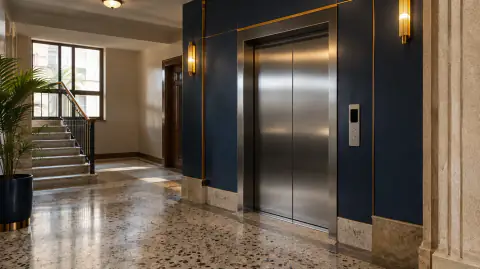
Elevator doors and their sensors are among the parts where technology has advanced the most compared to older generations. An old elevator with manual doors or a basic sensor can be upgraded with automatic doors and modern sensors that stop a door closing on a person or object, without replacing the whole elevator. This kind of upgrade usually covers:
- Replacing older door sensors with more precise ones
- Updating door opening and closing speed to match passenger movement
- Adding alarm systems and emergency lighting inside the cabin
The Cabin and Interior Finishes
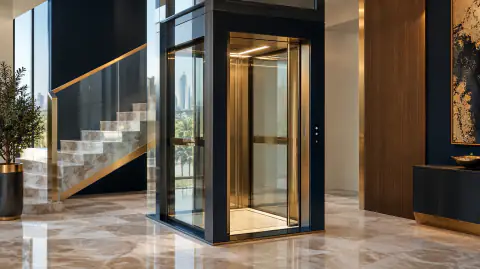
Updating the cabin interior, from the floor to the lighting, mirrors and side panels, is a common choice in buildings that want to improve the overall look without touching the mechanical parts. This kind of update suits buildings where the machine and control system are already in good condition, with the main goal being a better experience for passengers inside the cabin itself. The choice of new finishing materials usually depends on the nature of the building, a residential building may prefer calm, easy to clean finishes, while a commercial building tends toward a more modern look suited to receiving visitors continuously.
When Full Replacement Is the Better Option
There are cases where a partial update is not worthwhile, most notably when the elevator is old enough that spare parts for its model are no longer made, or when the structure of the elevator shaft itself needs changes that cannot be made while keeping the existing elevator in place. In these cases, full replacement saves more over the long run than repeated repair attempts on an elevator that has reached the end of its working life, and searching for a compatible replacement part for a discontinued model can take a long time with no guarantee of quality.
Likewise, when a building needs to increase the elevator's capacity or change its type entirely, from hydraulic to traction for example, replacement becomes the only way to make that change, since the type of machine is tied to the design of the shaft and machine room. This kind of decision is worth planning ahead with a specialised technical team, since it affects the building's design itself, not just the elevator.
The Inspection Step Before Deciding
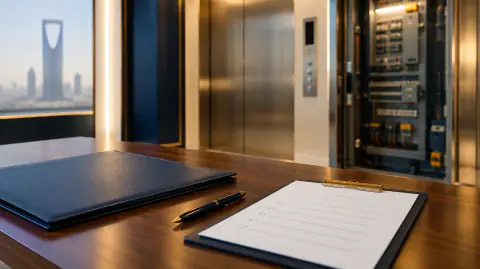
Before settling between an update and a replacement, a thorough technical inspection of every elevator component is the right first step. This inspection shows the actual condition of the machine, cables, control system and doors, and identifies which parts are still within an acceptable working life and which need replacing. Elevators in Saudi Arabia must meet the requirements of the Saudi Standards, Metrology and Quality Organization, and need periodic safety inspection to confirm they are fit to operate, and this inspection is a core part of any decision to modernise or replace.
It also helps for the inspection to assess whether the current cabin dimensions still suit how the building is actually used, especially if that use has changed since the elevator was first installed.
Deciding between modernisation and replacement does not call for guesswork, but a calm inspection of every part of the elevator and a comparison of each path's cost against its long term benefit. Lift Barq offers old elevator modernisation alongside full supply and installation when needed, so property owners get a clear assessment before any decision. For more on the signs worth watching, see signs your elevator needs maintenance, and for the services directly, see old elevator modernisation and periodic safety inspection.