Anyone planning an elevator for a residential or commercial building in Riyadh usually ends up choosing between two main types, hydraulic and electric traction. Each works on a different principle, and what suits a two or three storey building is not necessarily right for a ten storey tower. Understanding how the two mechanisms differ, and where each one fits, turns the decision into one based on the building's actual needs rather than a passing preference.
How a Hydraulic Elevator Works
A hydraulic elevator runs on a pump that pushes hydraulic oil into a cylinder connected to a piston, and the piston rises carrying the cabin with it. On the way down, the oil is released back into the tank gradually, so the cabin descends smoothly without needing much power for that direction of travel. One design places the piston directly under the shaft, while another sets it beside the shaft with an arm supporting the cabin from the side, and this second option reduces how deep the pit under the cabin needs to be. This setup usually needs a small room for the pump and tank close to the shaft.
Because its movement depends on oil pressure rather than a motor's rotation speed, a hydraulic elevator is usually slower than a traction one, which is not a drawback in a villa or a low rise building where the distance between floors is already short. This is why the type remains common in homes and low rise residential buildings around Riyadh.
How a Traction Elevator Works
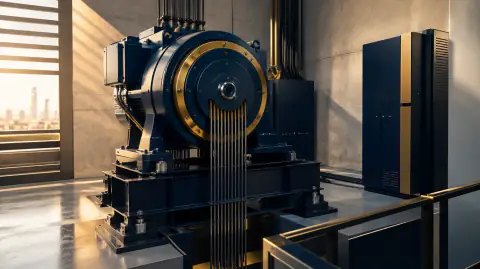
A traction elevator works on an entirely different principle from the hydraulic type. An electric motor turns a sheave that steel ropes pass over, with one end connected to the cabin and the other to a counterweight that roughly balances its weight. This balance reduces the effort the motor needs for every trip up or down. Many traction elevators today have no separate machine room at all, since the compact motor sits directly above the shaft, which frees up space in buildings with limited room on the roof.
Thanks to this principle, a traction elevator can reach much higher speeds as a building gets taller without losing much efficiency, which is why it is the common choice in residential and commercial towers and hotels, where the elevator gets used dozens of times a day over long hours.
Which One Suits Your Building's Floor Count
A hydraulic elevator generally suits low rise buildings, from two floors up to around four or five, because its speed and travel height are limited by its mechanical design. A traction elevator suits mid rise and high rise buildings equally well, since its efficiency does not drop much as height increases, and in towers it can reach speeds a hydraulic elevator rarely matches. The difference can be summed up as follows:
- Hydraulic elevator: suits villas and low rise buildings, with a moderate travel speed.
- Traction elevator: suits mid rise and high rise buildings, with a higher travel speed as height increases.
Space, Pit Depth and Machine Room Requirements
A traditional hydraulic elevator needs a deeper pit under the shaft to hold the piston, plus a small pump room next to the shaft, usually at ground level. A traction elevator's requirements vary by design, some types need a machine room above the shaft, while modern machine room less designs do away with that space entirely and only need enough headroom above the top floor. This difference is worth considering early when planning a building's layout, not after the structural design is already locked in.
Noise and Ride Comfort
A hydraulic elevator makes a noticeable sound from the pump while rising, a normal operating sound coming from the machine room rather than the cabin itself, while the descent is quieter since it relies on the oil returning gradually rather than the pump running again. A traction elevator tends to keep a steadier sound level throughout the trip, both up and down, since it relies on a motor and sheave rather than pumping fluid under pressure, a difference a daily user notices more than an occasional visitor.
Maintenance and Working Life
Maintaining a hydraulic elevator includes checking the oil level and watching for leaks from the cylinder and its connections, along with regular checks of the pump and control valves. A traction elevator's maintenance focuses instead on the steel ropes and sheave, along with the brake system and control panel, since these are the parts that carry the repeated load over years of operation. In both cases, Saudi regulations require an elevator to meet the requirements of the Saudi Standards, Metrology and Quality Organization, and to undergo periodic safety inspection regardless of its type.
Periodic inspection, whichever type of elevator is involved, usually catches wear or declining performance before it turns into a full breakdown that stops the elevator from running, which is why a regular maintenance schedule works out cheaper over time than waiting for a problem to appear on its own.
Choosing the Right Type for Your Building
The decision between the two types should not come down to appearance alone, but to the building's height, the space actually available around the shaft, and how it gets used day to day. A villa or a low rise building may find a hydraulic elevator a practical option with a comparatively simpler installation, while a residential or commercial tower needs a traction elevator to cover the height efficiently. Anyone still undecided can read our article on how to choose a home elevator for a villa for a broader look at other factors worth weighing.
In every case, having a specialist team assess the shaft location and the available space remains the right first step before settling on a type. Lift Barq supplies and installs both hydraulic and traction elevators with Italian machines and a warranty of up to fifteen years, covering the needs of residential and commercial buildings across Riyadh alike.